SENAPATI (COMMANDER‑IN‑CHIEF) — EXECUTED 9 JANUARY 1858, CHANDNI CHOWK, DELHI
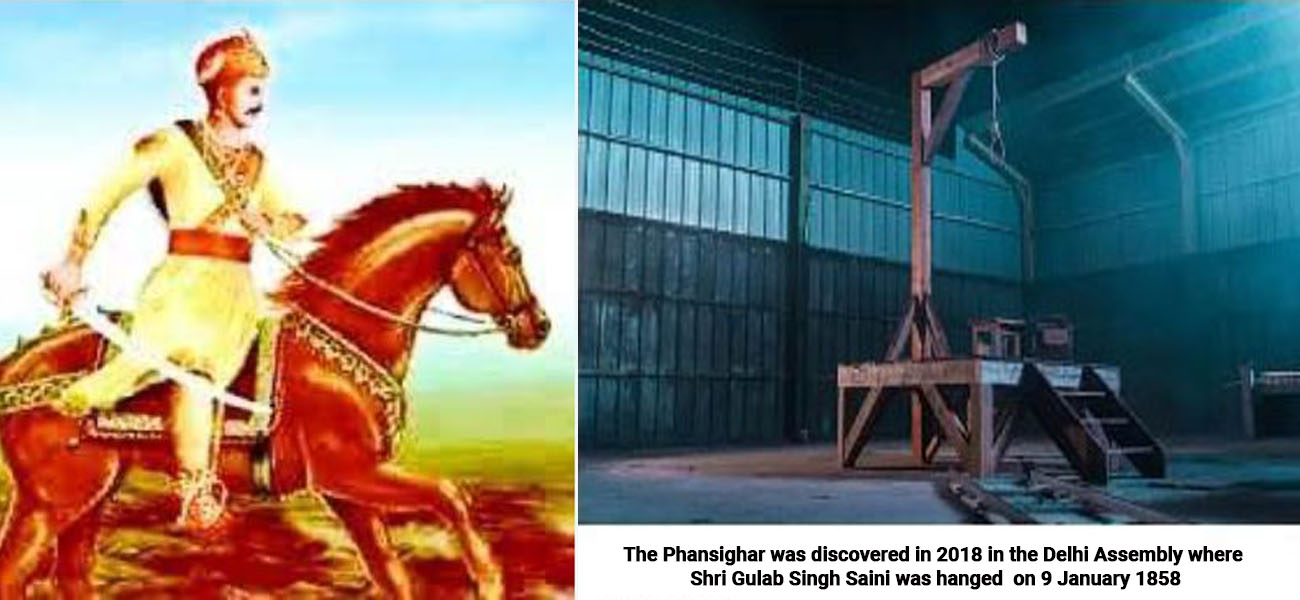
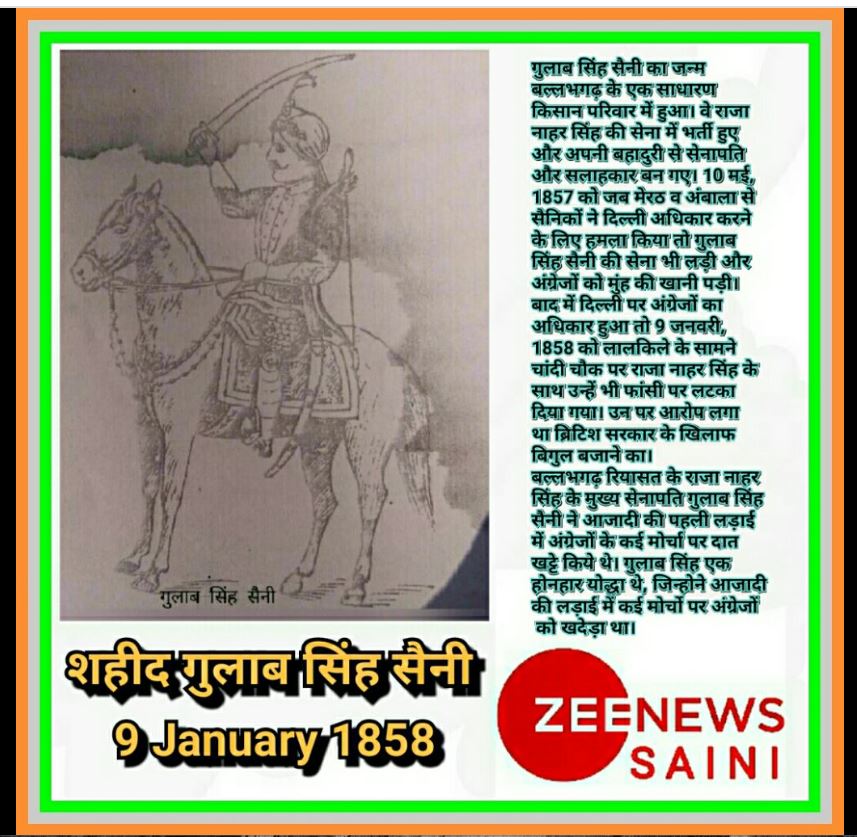
Commander-in-chief of Raja Nahar Singh's army, he led a composite force of Jats, Sainis, Meos, Muslims and Rajputs to a decisive victory over the British on 10 May 1857 — turning back their advance on Delhi.
शहीदों की चिताओं पर लगेंगे हर बरस मेले, वतन पर मरने वालों का यही बाकी निशां होगा।
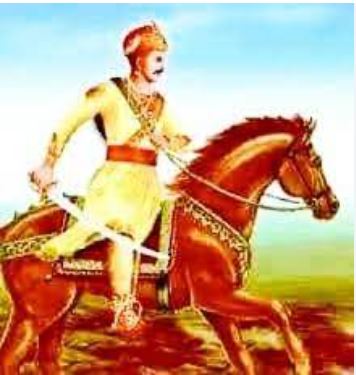
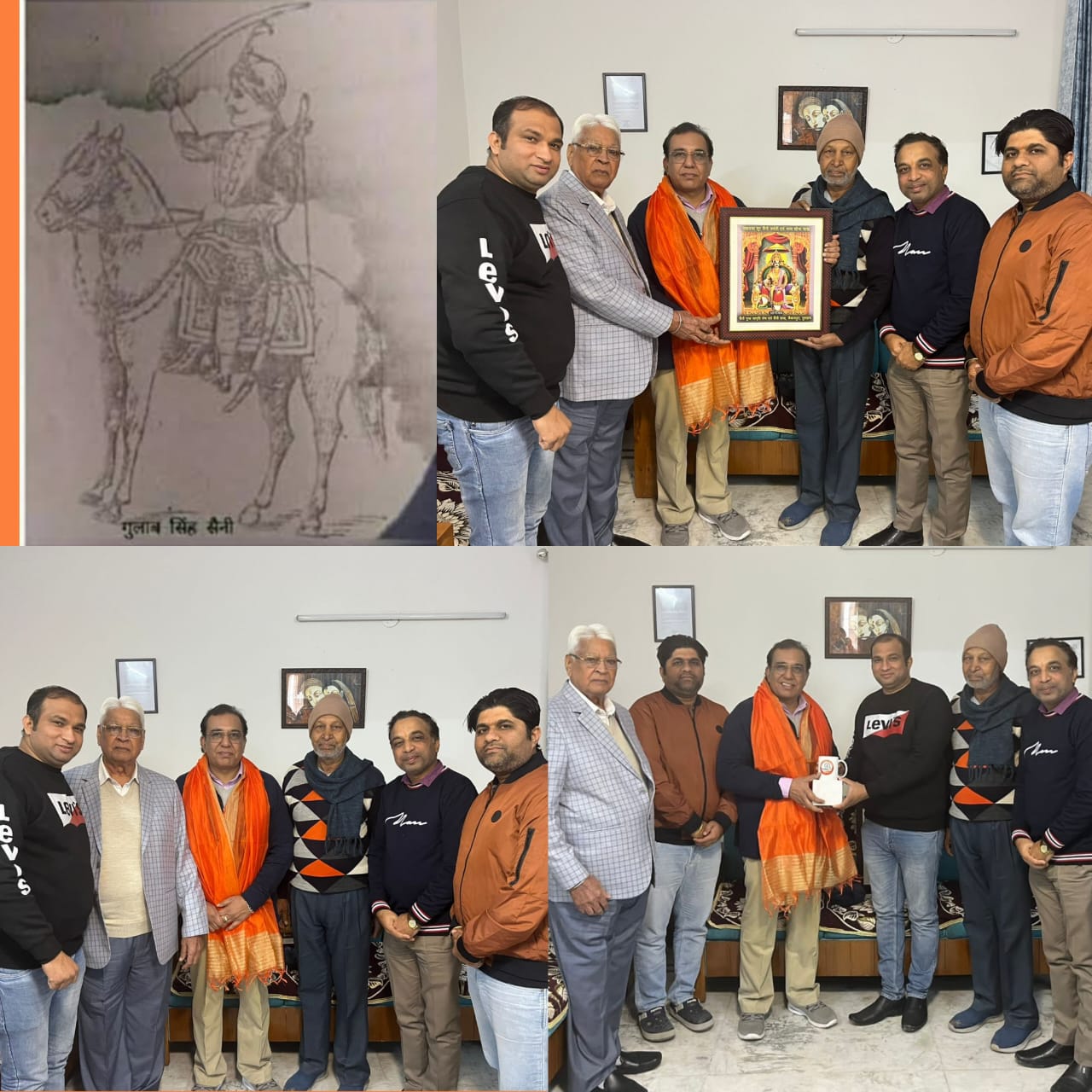
Fig. 01 — Gulab Singh Saini, Senapati of Ballabhgarh
01
Life History & War of Independence
The Sacrifice
On 10 May 1857, Gulab Singh Saini and his fellow soldiers crushed the British army before the gates of Delhi — and by nightfall had forced them into flight.
Gulab Singh Saini was a great revolutionary and freedom fighter — Senapati, commander-in-chief, of Ballabhgarh's army during the reign of Raja Nahar Singh. When British soldiers advanced from Meerut and Ambala to seize Delhi, it was Gulab Singh Saini who met them in the field.
He and his fellow dare-devil soldiers routed the British forces in that fierce engagement, preventing them from entering the capital. He is also remembered for his part in the coronation of Bahadur Shah Zafar as the nominal emperor and leader of the Indian Rebellion of 1857, chosen by a congress of Indian rulers.
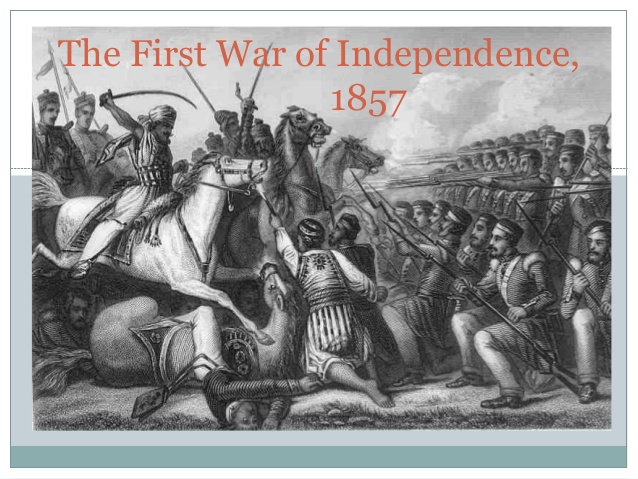
Fig. 02 — The First War of Independence, 1857
Birth & Military Training
Gulab Singh Saini was the son of Jodh Singh Saini, a close associate of Raja Nahar Singh of Ballabhgarh across many generations. His forefathers had traditionally held rank as army chiefs within Maharaja Nahar Singh's family regime, in the predominantly Jat principality.
Trained from youth by his father, Gulab Singh Saini was appointed Senapati of the Ballabhgarh army upon Nahar Singh's coronation as Raja.
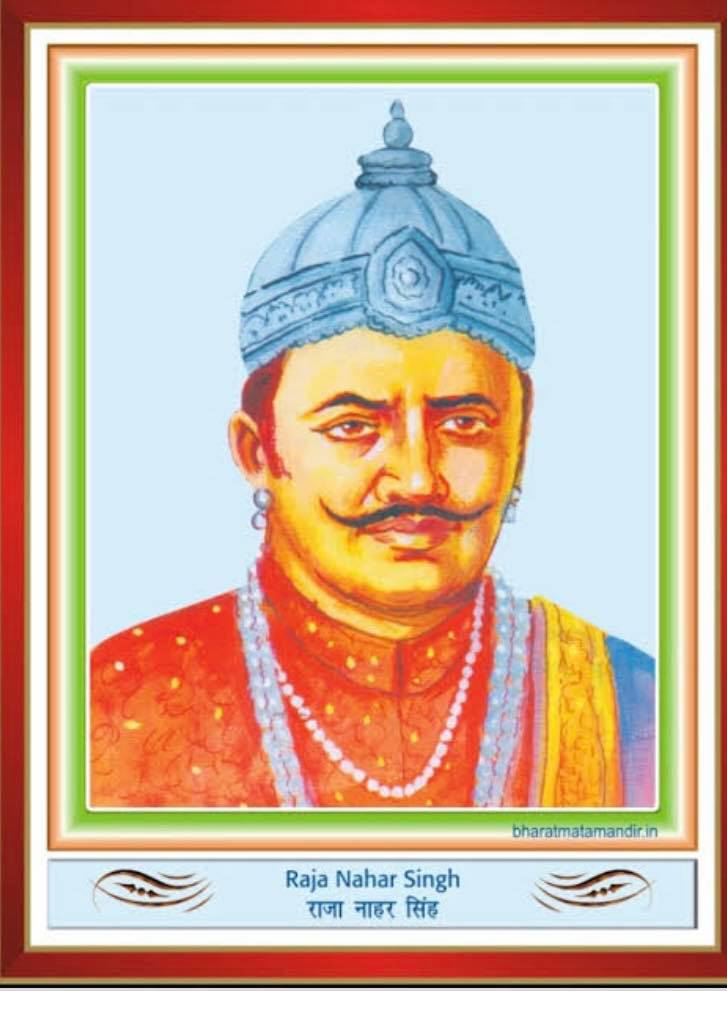
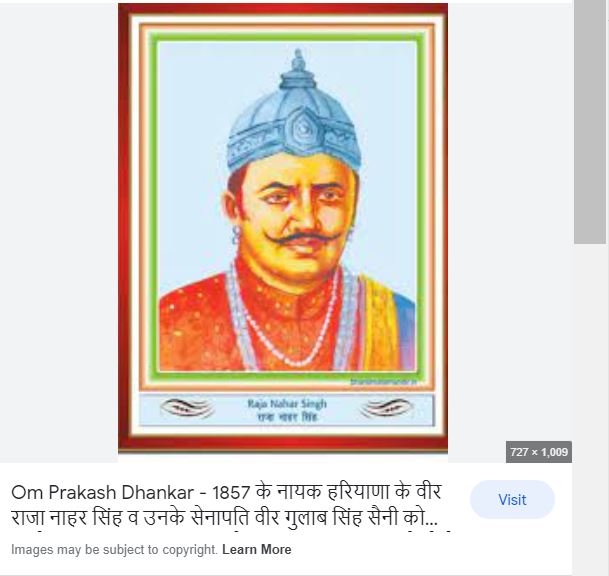
Fig. 03 — Raja Nahar Singh of Ballabhgarh
War of Independence, Capture & Execution — a record
10 MAY 1857
The battle for Delhi
English soldiers advanced from Meerut and Ambala to attack Delhi. Gulab Singh Saini, alongside Raja Nahar Singh, led a composite army of Muslims, Jats, Sainis, Meos and Rajput soldiers — inflicting a crushing defeat on the British and forcing their retreat.
LATER 1857
Capture by deceit
Gulab Singh Saini fought bravely throughout the campaign. He was ultimately captured by the British Army through deceit rather than defeat in the field.
9 JAN 1858
Execution at Chandni Chowk
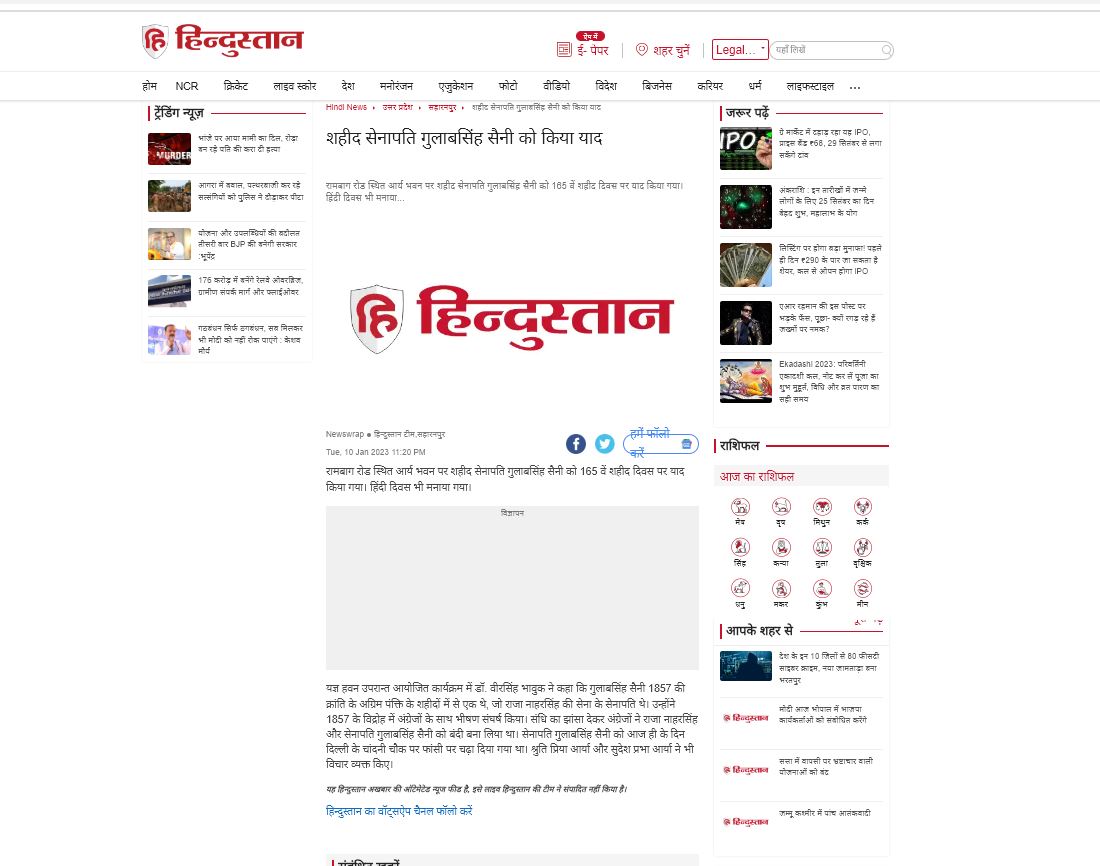
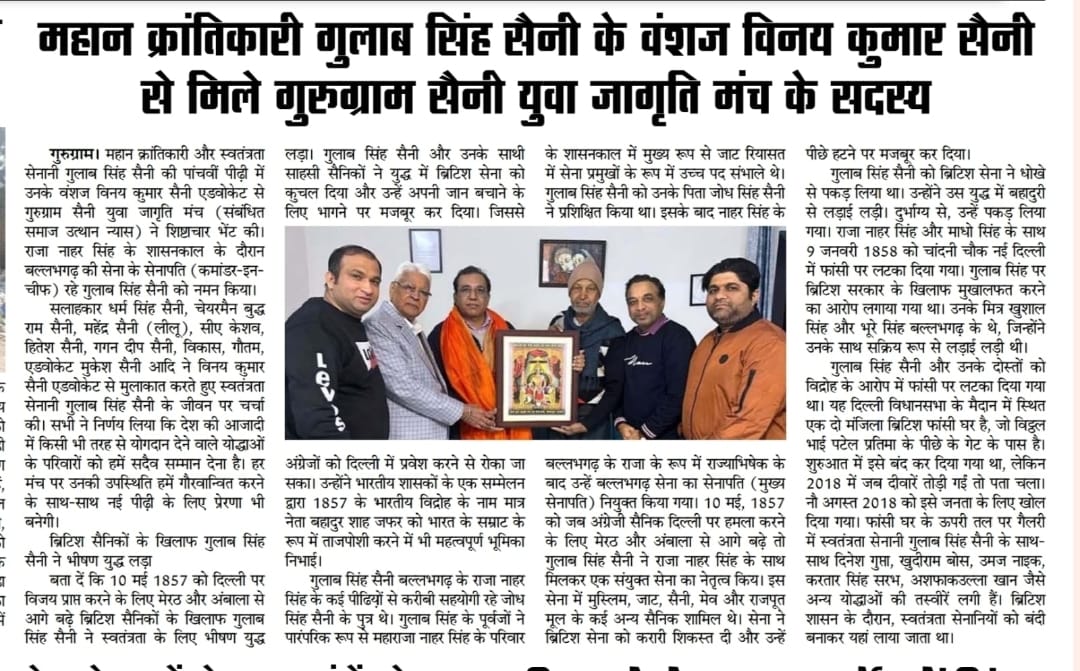
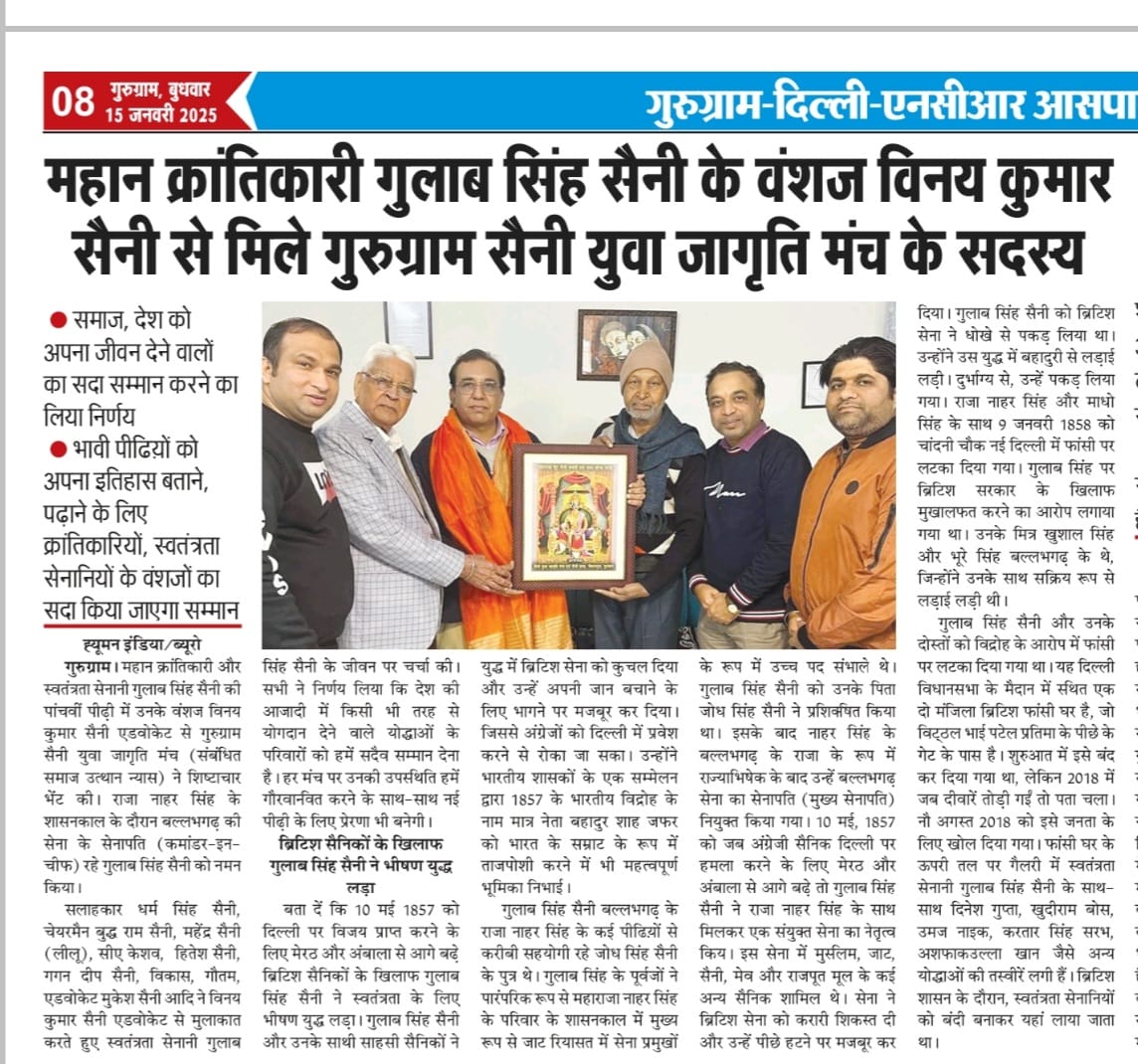
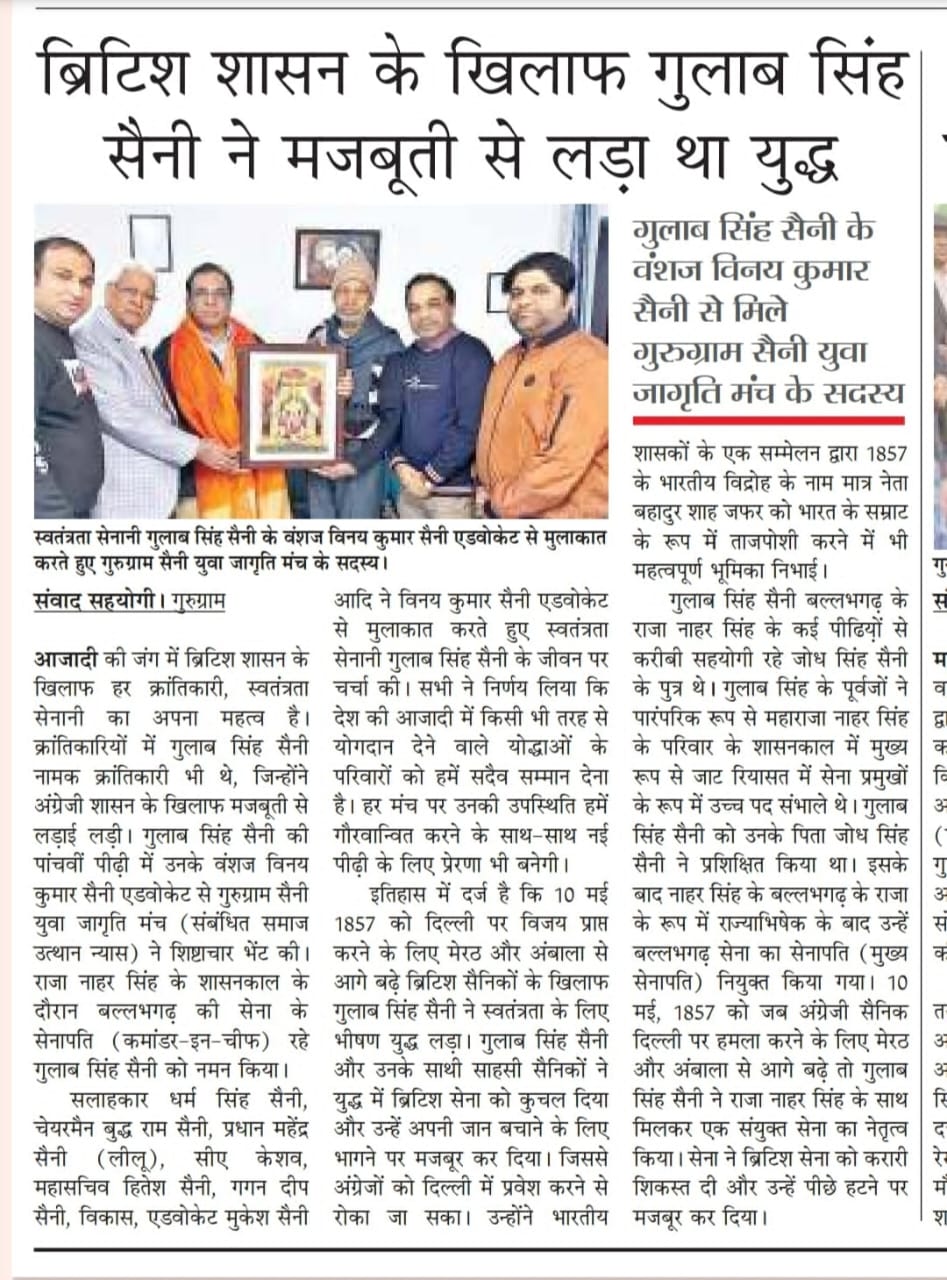
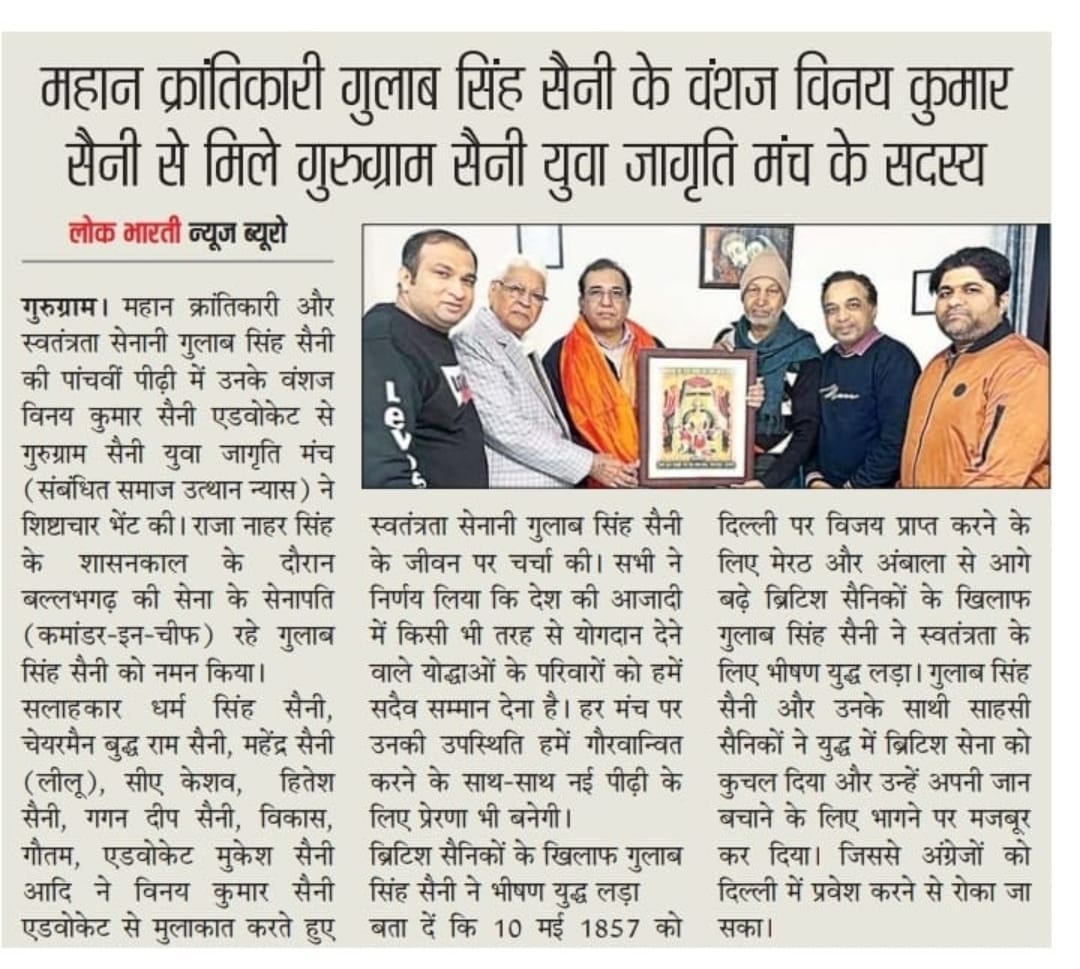
He was hanged alongside Raja Nahar Singh and Madho Singh at Chandni Chowk, New Delhi, on the charge of "playing the bugle" against the British government. His comrades Khushal Singh and Bhure Singh of Ballabhgarh, who had fought at his side, were hanged later.
02
Sacrifice
The Execution Room — Phasighar
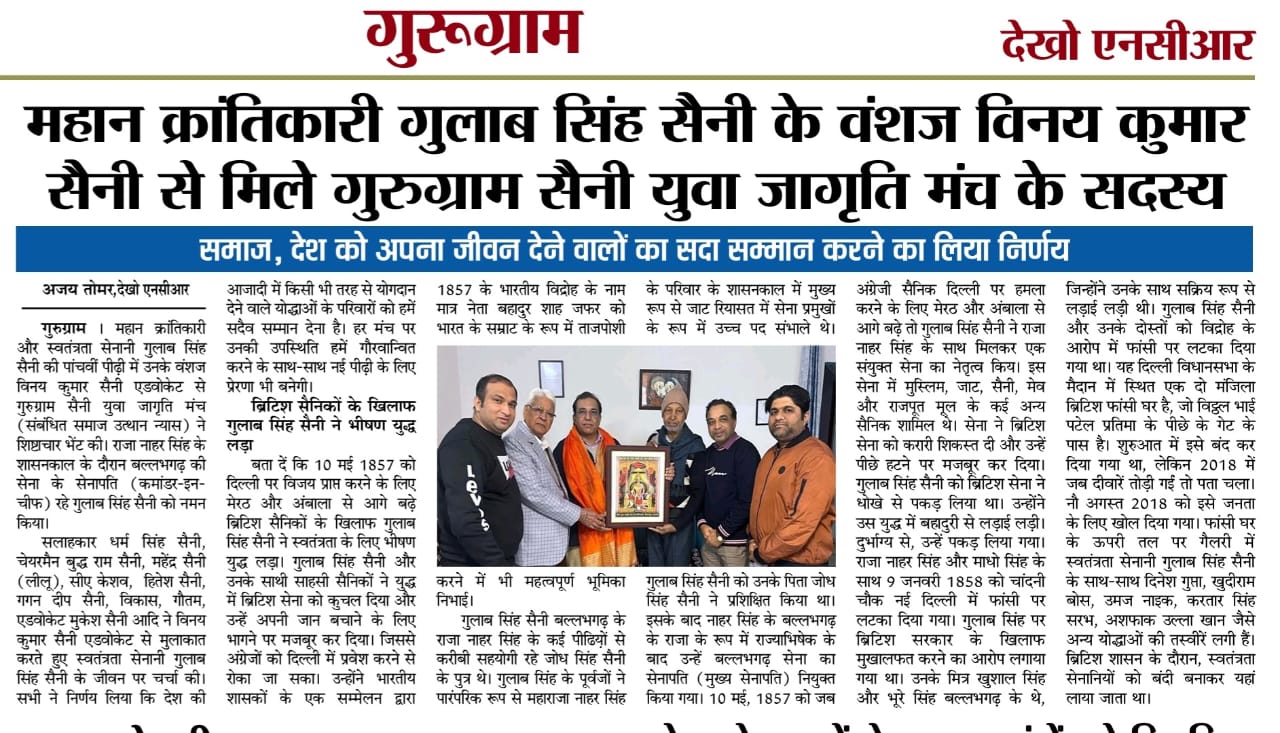
Gulab Singh Saini and his friends were tried for mutiny and hanged in this Phasighar — a two-storey British execution chamber standing on the grounds of the Delhi Assembly, close to the gate behind the Vitthal Bhai Patel statue.
The chamber was sealed for decades. It was rediscovered in 2018, when its walls were broken open, and made accessible to the public on 9 August 2018.
Photographs of Gulab Singh Saini hang in the upper-level gallery alongside other martyrs of the freedom struggle — Dinesh Gupta, Khudiram Bose, Umaji Naik, Kartar Singh Sarabha and Ashfaqullah Khan. During British rule, freedom fighters were brought to this room for trial and execution.
Fig. 04 — Phasighar, Delhi Assembly grounds
शहीदों की चिताओं पर लगेंगे हर बरस मेले, वतन पर मरने वालों का यही बाकी निशां होगा...
04
References
Contribution & Sources
Raja Nahar Singh Ka Balidan — Dr. Ranjit Singh Saini (MA, LLB, PhD), p. 10, 2000 edition.
Shaheed Gulab Singh Saini — B. P. Dheeraj (Correspondent), Punjab Kesari, 12 March 1997 edition.
1857: The First Challenge — Prof. V. N. Datta, The Tribune, Chandigarh, Thursday 10 May 2007.
Post-Pāṇinian Systems of Sanskrit Grammar — dedication page, Ranjit Singh Saini, Parimal Publications, 1999.
Nahar Singh Ka Balidan — Ranjeet Singh Saini, Chapter 9.
03
Family Record
The Descendant — Dr. Ranjit Singh Saini
Late Dr. Ranjeet Singh Saini, MA, PhD (20 Sep 1938 – 19 Sep 2000) was the elder son of Buddh Ram Saini. A born academician, he held a doctorate in Sanskrit grammar and an MA in History and Buddhist Studies, and authored several works of Sanskrit grammar. As a historian, he is best known for Raja Nahar Singh Ka Balidan.
He carried out extensive research into the lives of Raja Nahar Singh and Gulab Singh Saini, and served as Professor-in-Charge and Vice Principal of Moti Lal Nehru College, University of Delhi — contributing substantially to recovering the history of the family's ancestors.
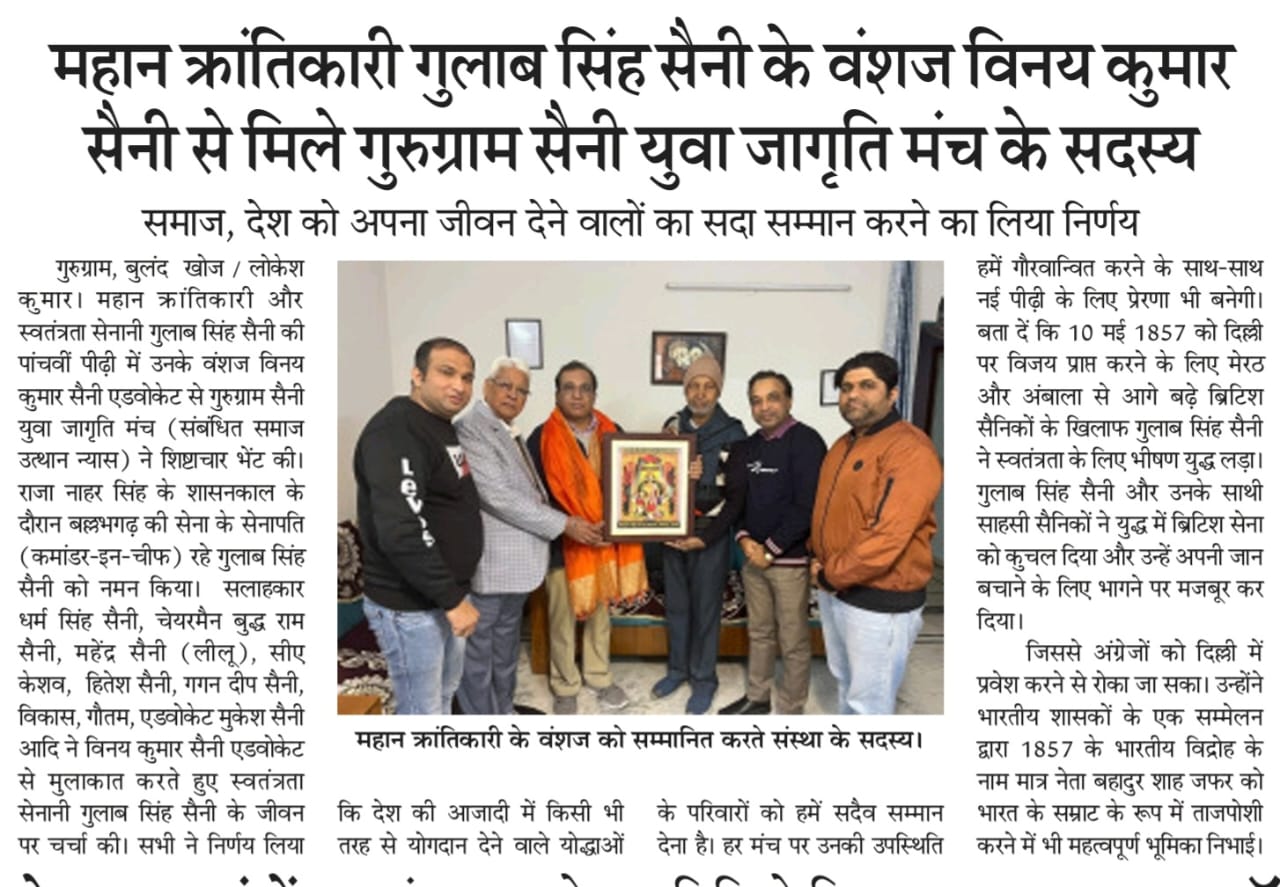
Fig. 05 — Family record
Caution — legal notice
The named person above is the original and true legal heir, successor and descendant of Freedom Fighter Shree Gulab Singh Saini. Any person falsely claiming to be a descendant or successor shall be dealt with firmly, including legal action for impersonation, cheating, and damages for loss of goodwill.
It has come to notice that unscrupulous individuals have falsely claimed to be legal heirs of Late Shree Gulab Singh Saini in order to seek government patronage, public sympathy, and unwarranted gain. Strict legal action is being taken, and the general public is warned against dealing with such persons without verification.